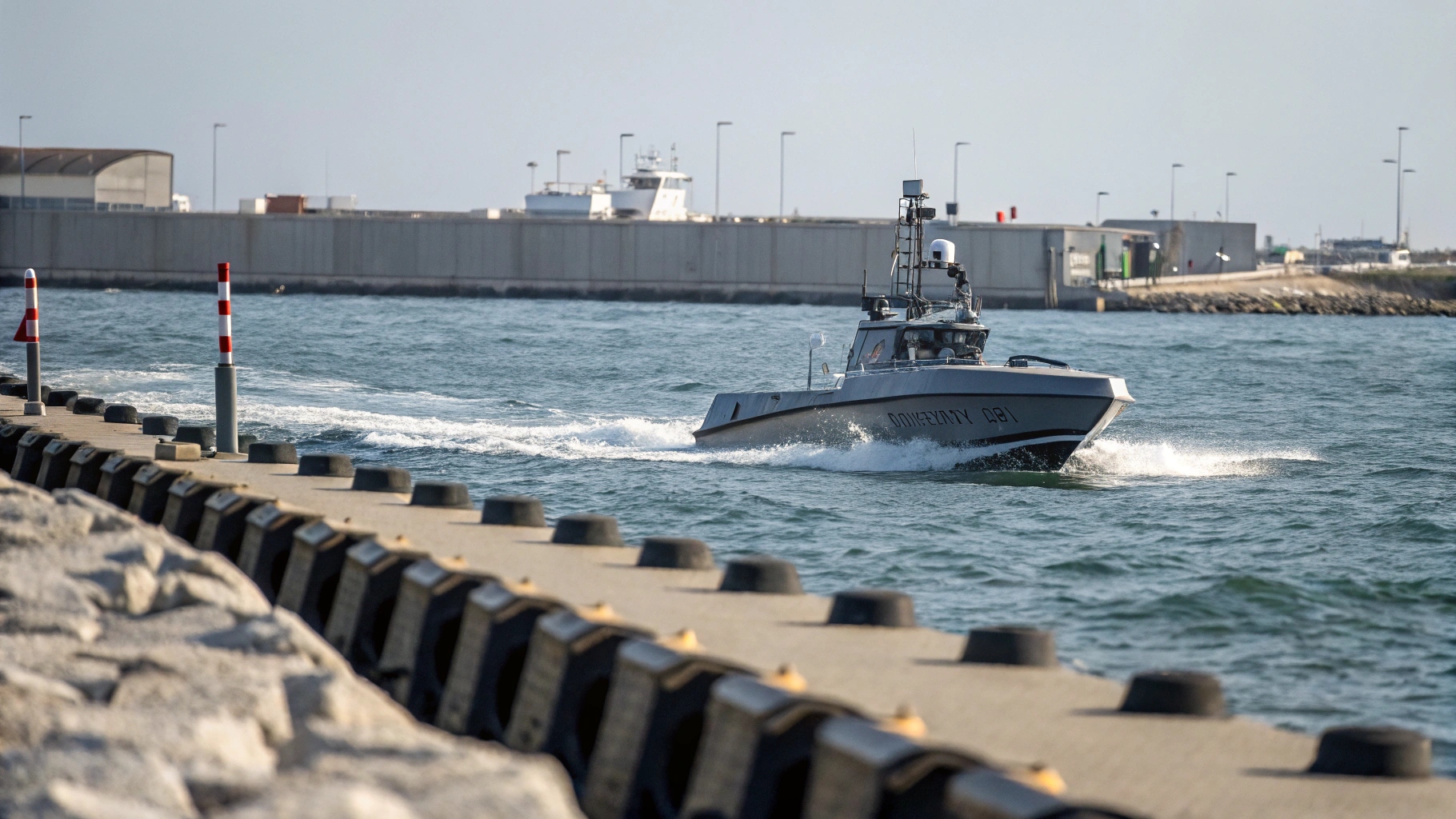
A Massachusetts-based autonomy developer has signed a production agreement with a Gulf Coast shipyard to build its first fleet of long-range unmanned surface vessels. The shipyard will use modular, automated manufacturing techniques — including panel-line assembly and mechanized welding — across multiple facilities to accelerate throughput and enable simultaneous construction of multiple hulls. The autonomy company recently completed an initial funding round that raised $50 million, bringing total capital to approximately $61 million; proceeds are earmarked to support production, systems integration, and entry-into-service activities targeted for 2026. The shipyard, with a long history of commercial and military construction, will leverage existing infrastructure and experience to produce autonomous hulls faster than traditional manned warships, which often require specialized yards and lengthy build cycles. The production model emphasizes using underutilized or smaller domestic yards with modular, scalable designs to diversify national shipbuilding capacity, reduce pressure on large naval yards, and create local industrial employment. Management has also recruited experienced shipbuilding and autonomy personnel to support scale-up. The autonomy firm’s architecture prioritizes modular payload bays, software-updatable systems, and simplified maintenance to permit rapid upgrades after initial fielding. The agreement is positioned as a practical strategy to field autonomous maritime capabilities at pace: combine private investment, automated manufacturing methods, and distributed shipyard partnerships to lower unit costs, shorten lead times, and build a supply base capable of producing multiple units concurrently. This effort dovetails with national interest in expanding domestic maritime industrial capacity for emerging classes of unmanned platforms and demonstrates a pathway from seed-stage capital to production-scale manufacturing.