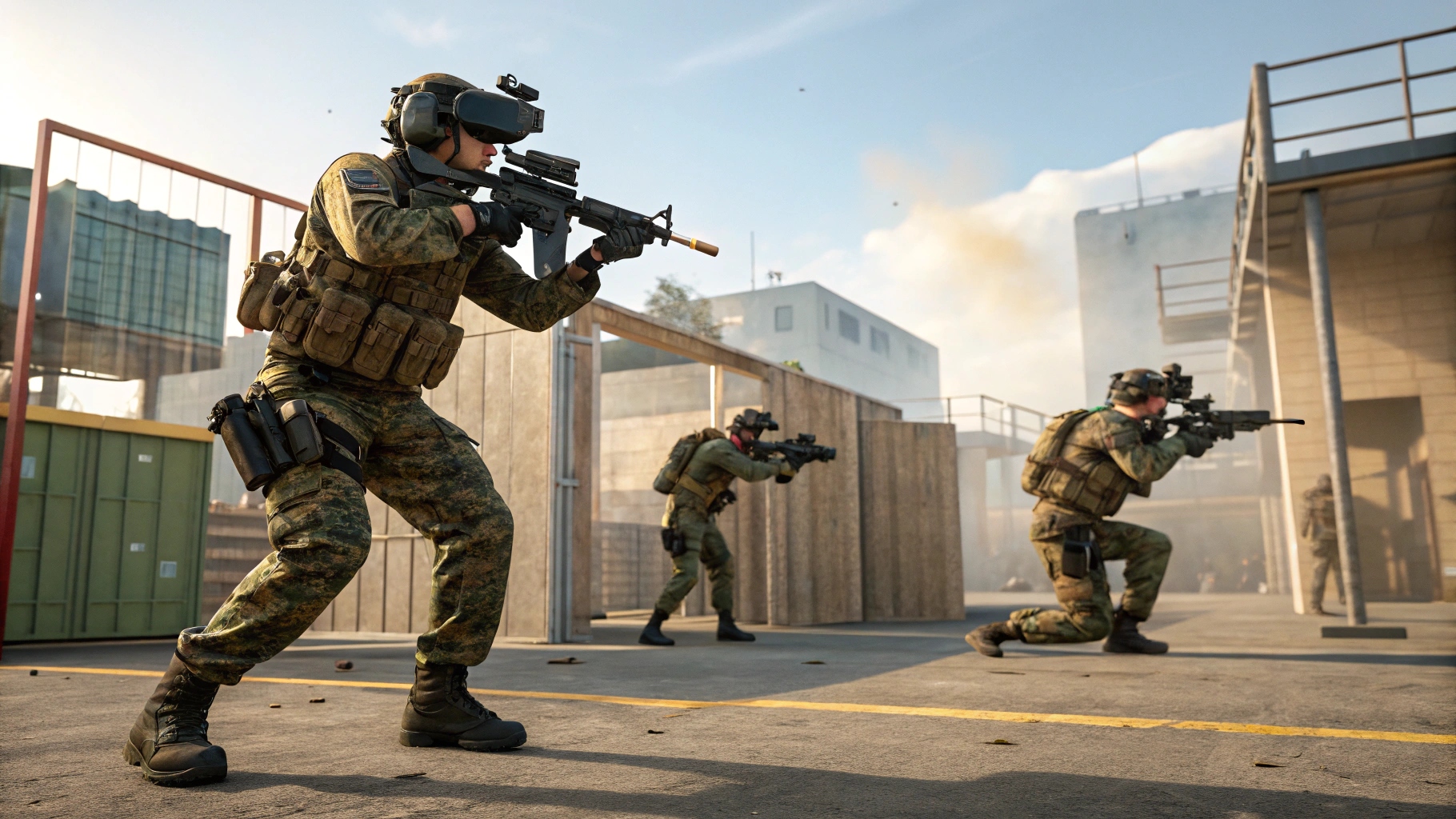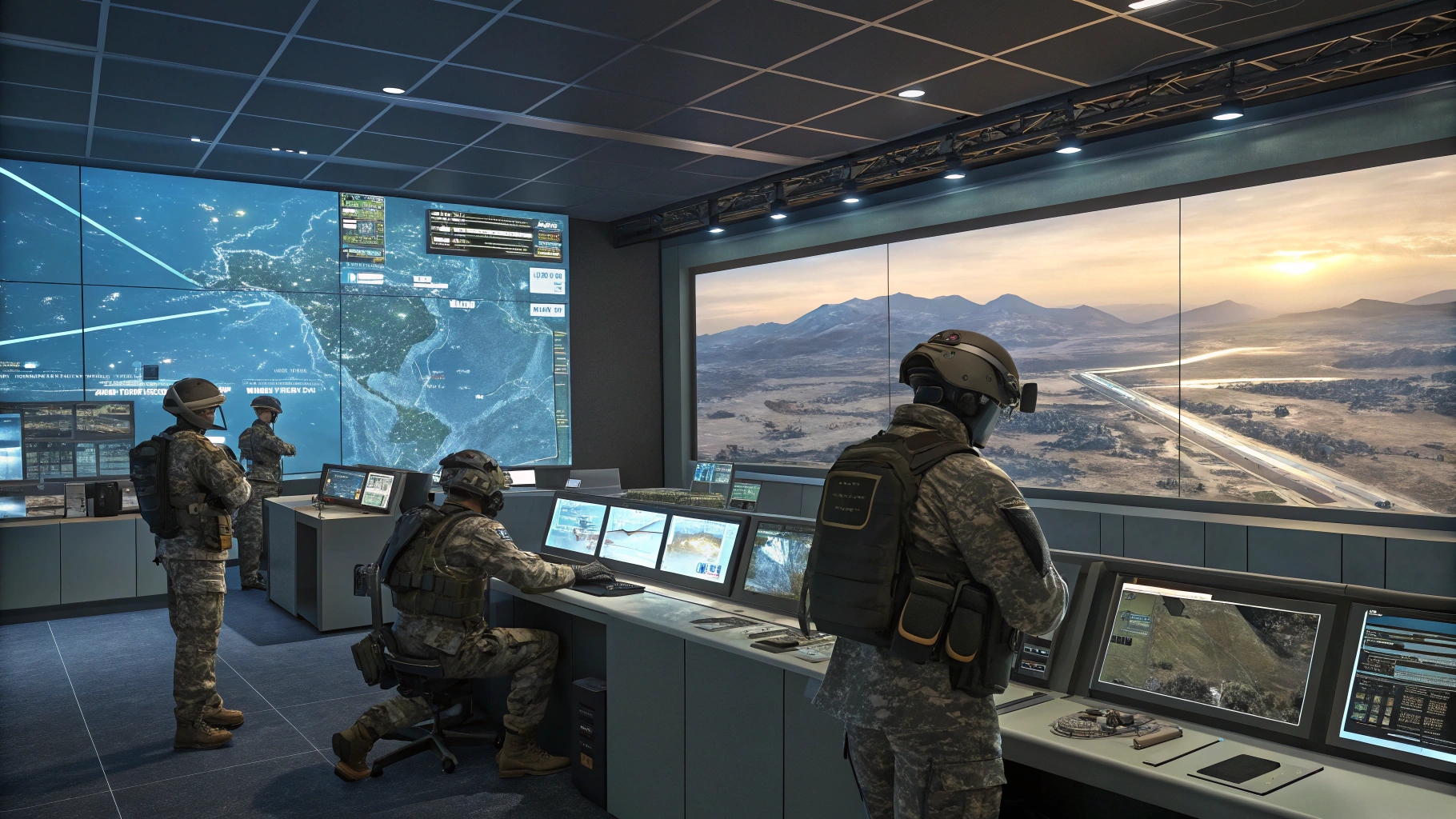
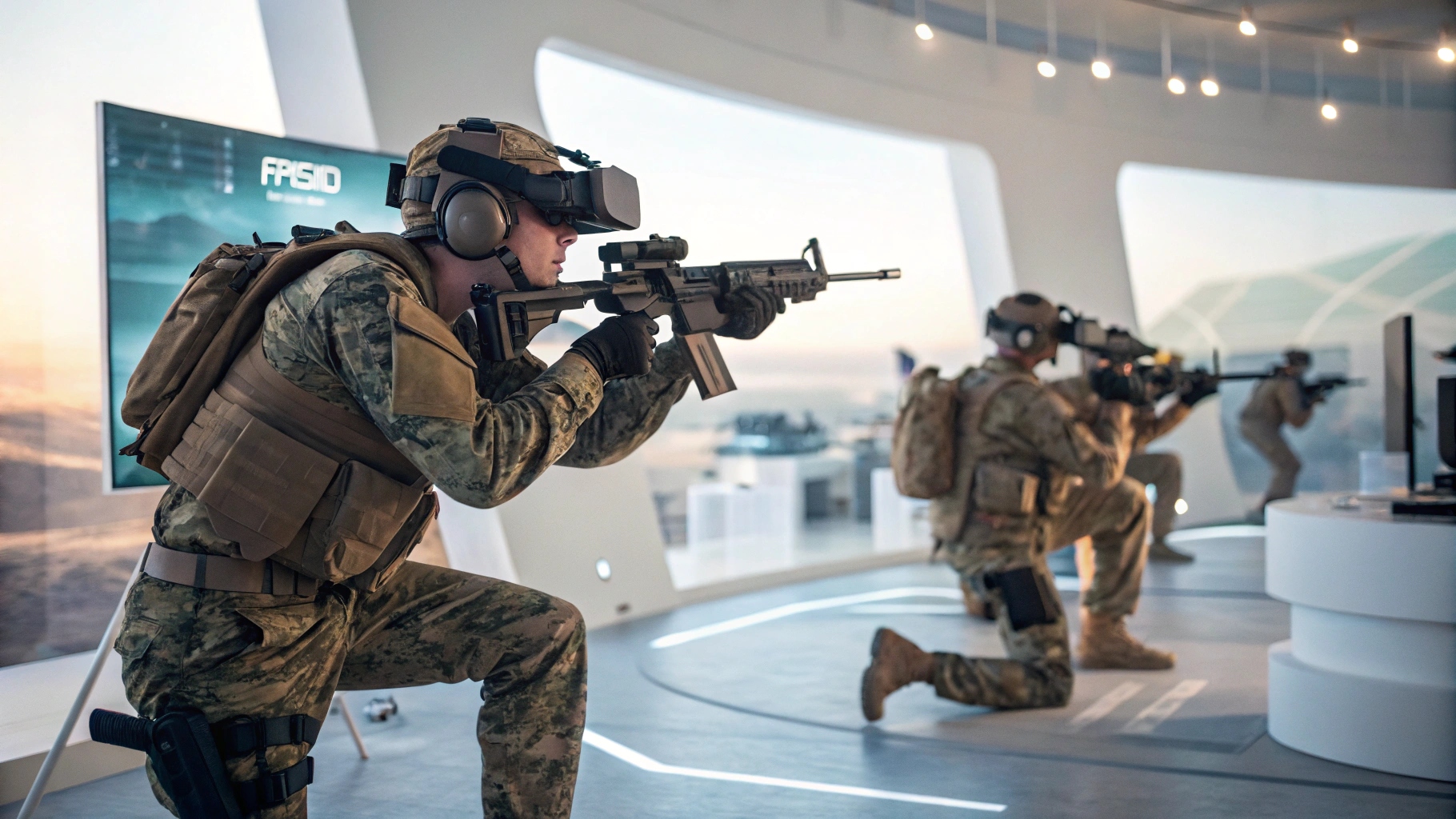
The Simulator Development Division has developed an advanced multi-user virtual reality urban warfare training system intended to provide security forces with immersive, repeatable, and measurable tactical preparation. The platform is designed to allow multiple personnel to train together in highly complex operational environments without requiring repeated access to physical training facilities. By reproducing demanding urban scenarios digitally, the system enables trainees to rehearse high-risk interventions before conducting similar operations in real-world conditions. The simulator supports a wide range of tactical situations, including close-quarter battle exercises, building-clearing operations, rooftop engagements, rural insertion scenarios, and kill-house simulations. Training environments can be configured according to specific mission requirements, allowing instructors to create different operational conditions and repeat scenarios as needed. The system also incorporates hostile and civilian artificial-intelligence agents, providing trainees with dynamic situations in which they must respond to changing threats and civilian activity. Environmental variables can also be adjusted, including weather, lighting, and time of day. These features allow personnel to train for conditions that may be difficult or expensive to reproduce consistently at physical training locations. The platform incorporates instrumented weapon peripherals and ballistic calculations to provide a more realistic representation of weapon use. Instructor monitoring tools allow command staff to observe training activity and assess individual and team performance in real time. This can include evaluation of marksmanship, tactical communications, decision-making, and coordination between team members. The ability to collect and measure performance data provides an additional advantage because instructors can identify weaknesses and repeat specific scenarios until trainees demonstrate improvement. The multi-user design also emphasizes coordinated team operations. Urban combat and security missions frequently require personnel to communicate effectively, move as a coordinated unit, and respond rapidly to changing circumstances. A virtual environment can provide repeated opportunities to practice these skills without exposing personnel to the physical risks associated with live training. The system is also intended to reduce some logistical demands associated with high-frequency tactical exercises. Traditional urban warfare training can require dedicated facilities, ammunition, equipment, personnel, and significant preparation time. A digital simulator can provide a scalable alternative for rehearsals while allowing training organizations to modify scenarios quickly. By combining virtual reality, artificial intelligence, instrumented weapons, environmental controls, ballistic modeling, and instructor monitoring, the platform creates a comprehensive training environment. Its applications extend beyond conventional military units to law-enforcement and other security organizations that require preparation for high-risk interventions. The system ultimately seeks to improve operational readiness and decision-making speed by allowing personnel to repeatedly rehearse complex situations in a controlled digital environment.