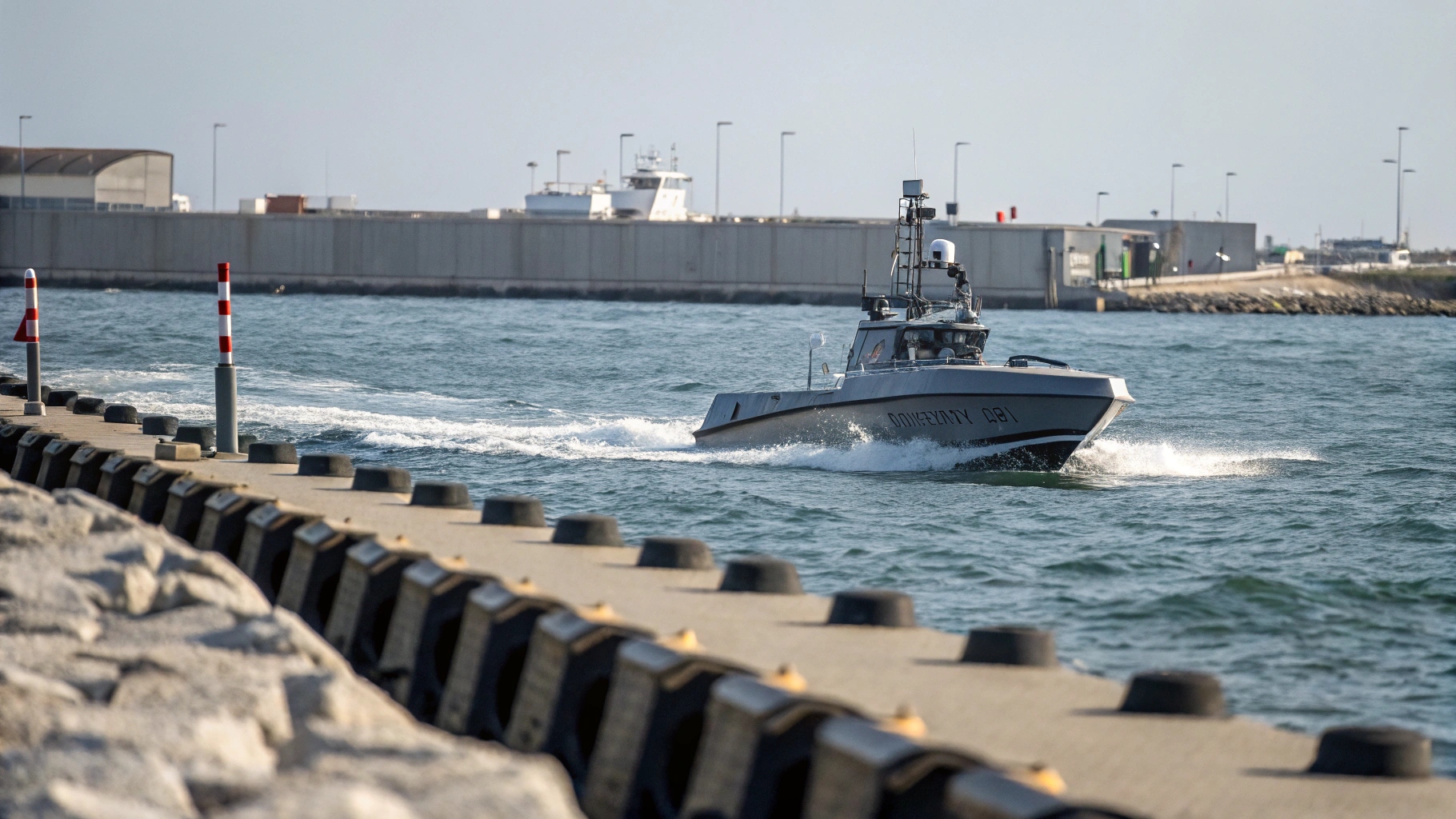
HII and Shield AI have successfully completed a dual-autonomy integration trial on the ROMULUS unmanned surface vessel (USV), marking a significant advancement in autonomous naval operations. Conducted over three days in late October and announced at the Indo Pacific International Maritime Expo, the test validated the compatibility between Shield AI’s Hivemind mission autonomy system and HII’s Odyssey autonomy suite. The integration demonstrated both systems’ ability to operate in tandem aboard the ROMULUS 20 USV platform, enhancing autonomous control, mission adaptability, and system coordination in maritime environments. The trial represented the first sea deployment of Shield AI’s Hivemind software, previously used in combat-ready aerial systems, signaling its transition from air to maritime applications. The software enables unmanned platforms to execute complex missions with minimal operator input, making real-time decisions in dynamic conditions. HII’s Odyssey suite complements this by managing navigation, system health, and communication across multiple vessel systems. According to company officials, the integration will support future development of scalable, networked USV fleets capable of autonomous coordination and mission-sharing across naval task groups. This capability aligns with growing global demand for distributed maritime operations and persistent surveillance capabilities. The collaboration builds on HII’s ongoing investment in its Mission Technologies division and Shield AI’s efforts to extend its autonomy architecture beyond aerial drones to the maritime domain. As navies increasingly pursue unmanned and hybrid fleet concepts, the integration of dual-autonomy systems represents a critical milestone toward multi-domain autonomy and future fleet modernization.