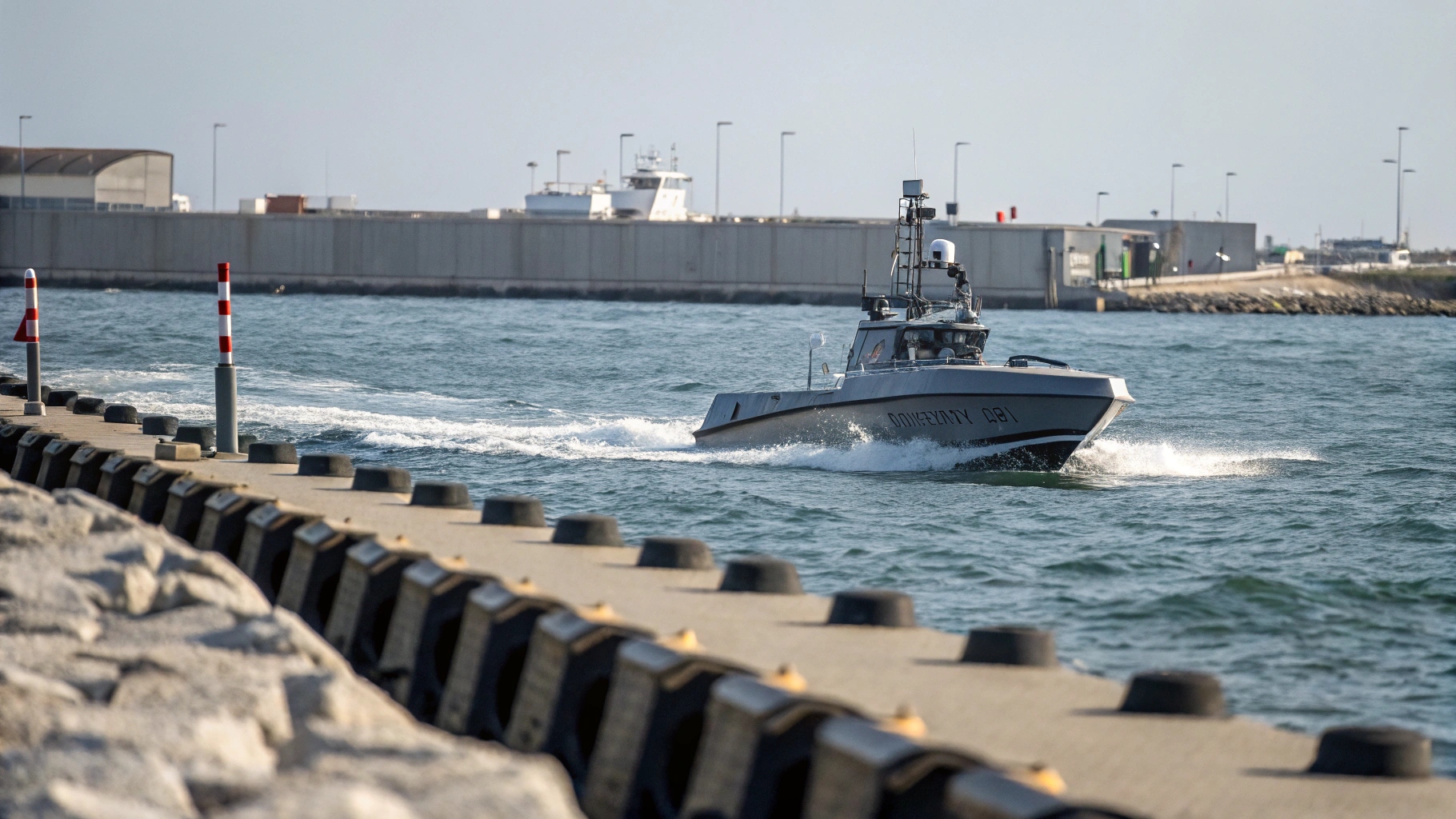

The Royal Navy has announced plans to acquire a new fleet of 20 uncrewed surface vessels (USVs) as part of its Project Beehive initiative, marking a decisive step in the service’s long-term transformation into a hybrid force integrating manned, unmanned, and autonomous systems. The program represents a cornerstone of the Navy’s modernization effort to enhance operational flexibility and technological agility in contested maritime environments. Under Project Beehive, the vessels will be acquired at Technology Readiness Level 4/5, meaning that while their core technologies have been demonstrated, they still require iterative development and testing. Through a spiral development process, each successive version will incorporate lessons learned from operational trials, enabling rapid capability maturation. The Royal Navy has stipulated an open-architecture design for the USVs to ensure interoperability, modularity, and future upgrade potential. This approach allows emerging sensors, autonomy packages, and combat systems to be integrated as technology advances or threats evolve. The uncrewed platforms will initially act as testbeds, allowing the Navy to evaluate autonomy software, mission systems, and swarm-operation concepts before wider adoption across the fleet. Valued at approximately £10 million ($13 million), the contract will primarily benefit southern and southwestern UK shipbuilding and technology centers, reinforcing regional maritime industry capacity. Recent demonstrations off Scotland’s coast showcased five remotely piloted “Rattler” boats escorting a warship, controlled from more than 500 miles (805 kilometers) away. These trials validated long-range command-and-control networks and autonomy functions essential for future unmanned fleets. Project Beehive aligns with the Royal Navy’s broader plan to integrate uncrewed escort vessels alongside Type 26 frigates and next-generation submarines operating in the North Atlantic. These USVs will eventually conduct independent surveillance, threat detection, and defensive missions. The initiative complements parallel developments in naval aviation, where the Navy intends to field hybrid air wings aboard its Queen Elizabeth-class carriers and launch its first jet-powered drone at sea in 2026. Together, these efforts signal the Royal Navy’s determination to remain at the forefront of maritime innovation, blending human command with machine precision to create a future-ready, digitally connected fighting force.