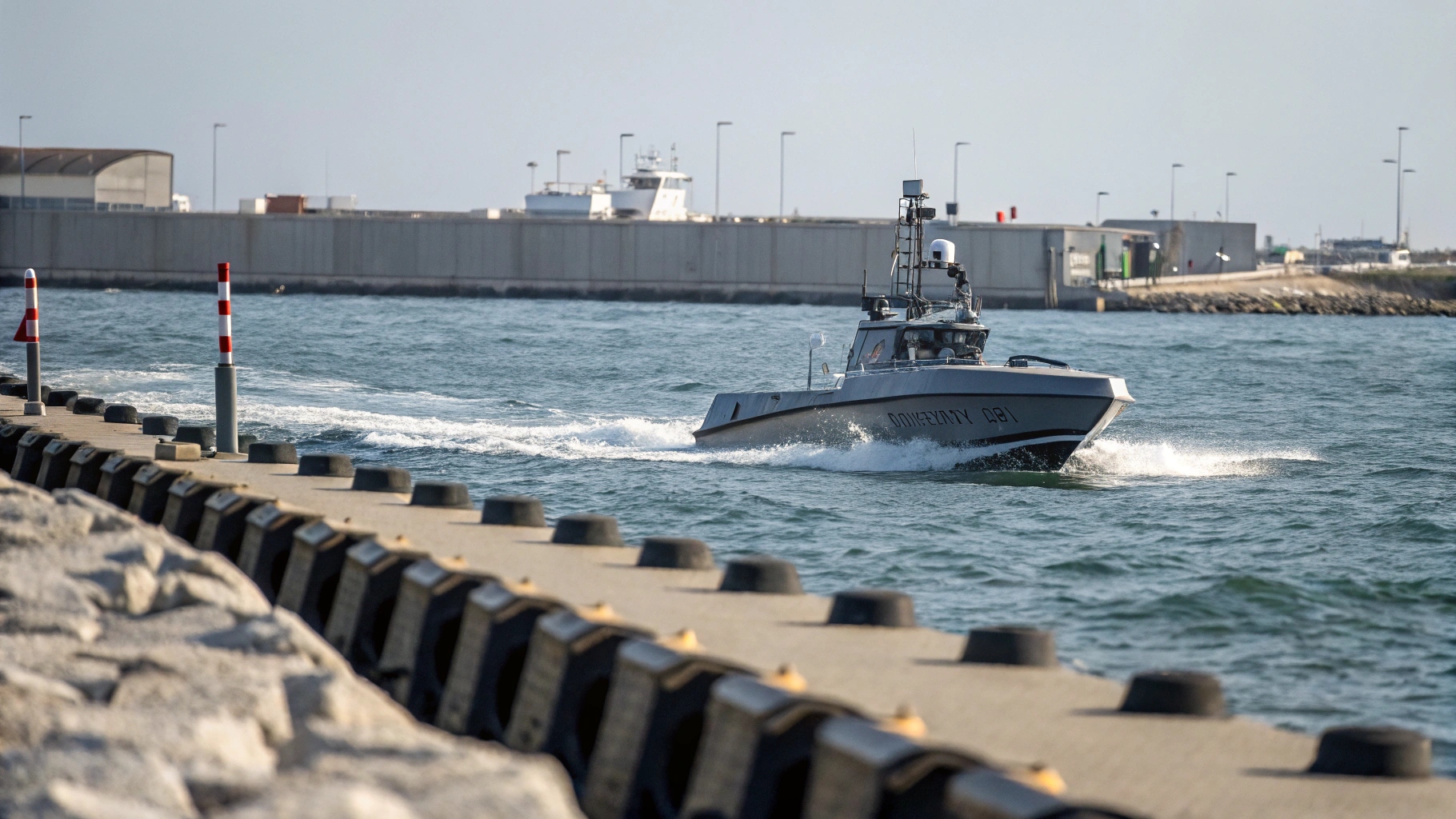
South Korea’s defense industry is moving beyond experimentation toward real-world application of manned-unmanned teaming at sea, with a government-funded effort focused on combat-capable unmanned surface vessels designed to integrate directly with crewed naval forces. Rather than treating unmanned ships as auxiliary assets, the program seeks to embed them into fleet operations through a common control and command framework. At the core of the effort is an integrated control system responsible for navigation, command execution, and coordination with manned vessels, ensuring unmanned platforms can operate safely and effectively within complex naval formations. Complementing this is a weapons operation and launch control capability that automates engagement processes traditionally managed by human crews, allowing unmanned vessels to respond rapidly to mission tasking. An autonomous mission system ties these elements together, enabling advanced mission planning, synchronized execution, and adaptive decision-making throughout an operation. This approach supports fully autonomous or crew-optional missions, expanding operational flexibility while reducing risk to personnel. The technologies under development are expected to strengthen South Korea’s ability to conduct long-range maritime strike and distributed operations, particularly in high-threat environments. LIG Nex1 is leading the project alongside the Korea Research Institute for Defense Technology Planning and Advancement, with approximately 49 billion won allocated over a five-year period ending in December 2030. The initiative is positioned as a critical stepping stone toward the next phase of South Korea’s Combat Unmanned Surface Vessel Batch-II program.