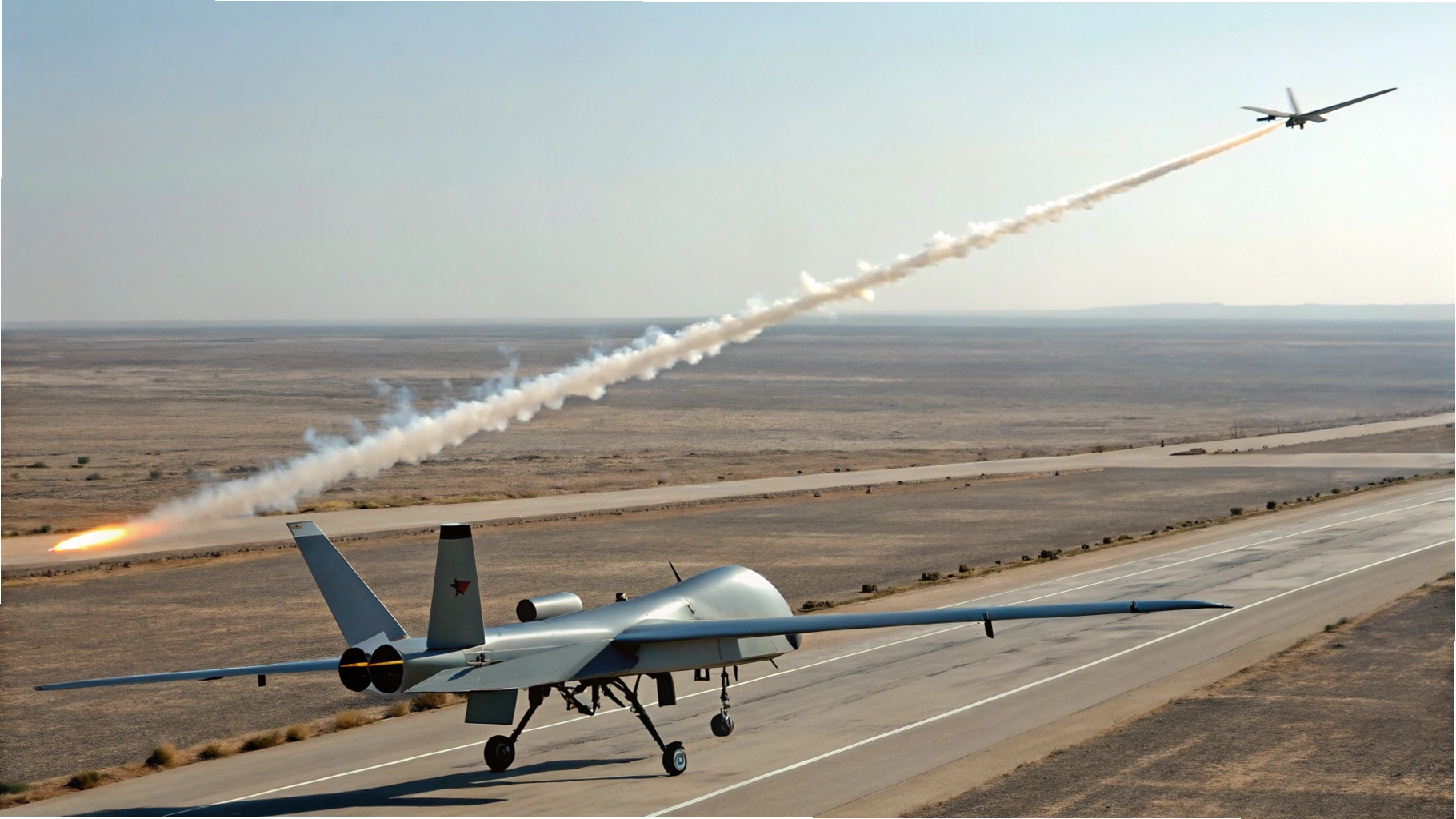
Russia has begun serial production of the Sukhoi S-70 Okhotnik-B (Hunter-B), its first heavy stealth combat drone, signaling a significant milestone in the country’s push toward autonomous strike aviation. Developed by Sukhoi under the United Aircraft Corporation (UAC), the Okhotnik-B represents Russia’s most advanced unmanned combat aerial vehicle (UCAV) program, complementing the Su-57 fifth-generation fighter as part of a manned-unmanned teaming strategy. The Okhotnik-B is a flying-wing stealth platform with a takeoff weight of around 20 tons and a wingspan of 19 meters, powered by a single AL-41F turbofan engine. Its design minimizes radar cross-section through composite materials, internal weapon bays, and reduced thermal emissions. The drone can reportedly achieve speeds up to 1,000 km/h and an operational range exceeding 6,000 kilometers, giving it deep-strike and reconnaissance capabilities across long distances. Serial production follows a multi-year testing phase that included flight trials in coordination with the Su-57. The system demonstrated autonomous navigation, precision strike capability, and data-sharing features, essential for network-centric warfare. The aircraft’s artificial intelligence (AI)-enabled flight control system allows it to perform coordinated missions, including air-defense suppression and electronic warfare, either independently or in conjunction with manned assets. Russian defense officials revealed that the first production-standard units are now being assembled at the Novosibirsk Aircraft Production Association (NAPO) facility. Deliveries to the Russian Aerospace Forces (VKS) are scheduled to begin within the next year. The program emphasizes domestic manufacturing and local component sourcing, addressing earlier sanctions-related supply challenges. The Okhotnik-B’s deployment will significantly enhance Russia’s strike capability by offering a low-cost, stealth-enabled complement to crewed aircraft. Analysts note that the S-70 could serve in multiple configurations—ranging from long-range precision strike and ISR (intelligence, surveillance, reconnaissance) to electronic countermeasures. Its entry into serial production underscores Moscow’s ongoing investment in next-generation unmanned systems as part of its broader defense modernization goals. By pairing the Okhotnik with the Su-57, Russia aims to establish a loyal wingman concept similar to U.S. and European programs, creating a coordinated combat network capable of overwhelming enemy defenses while minimizing pilot risk.