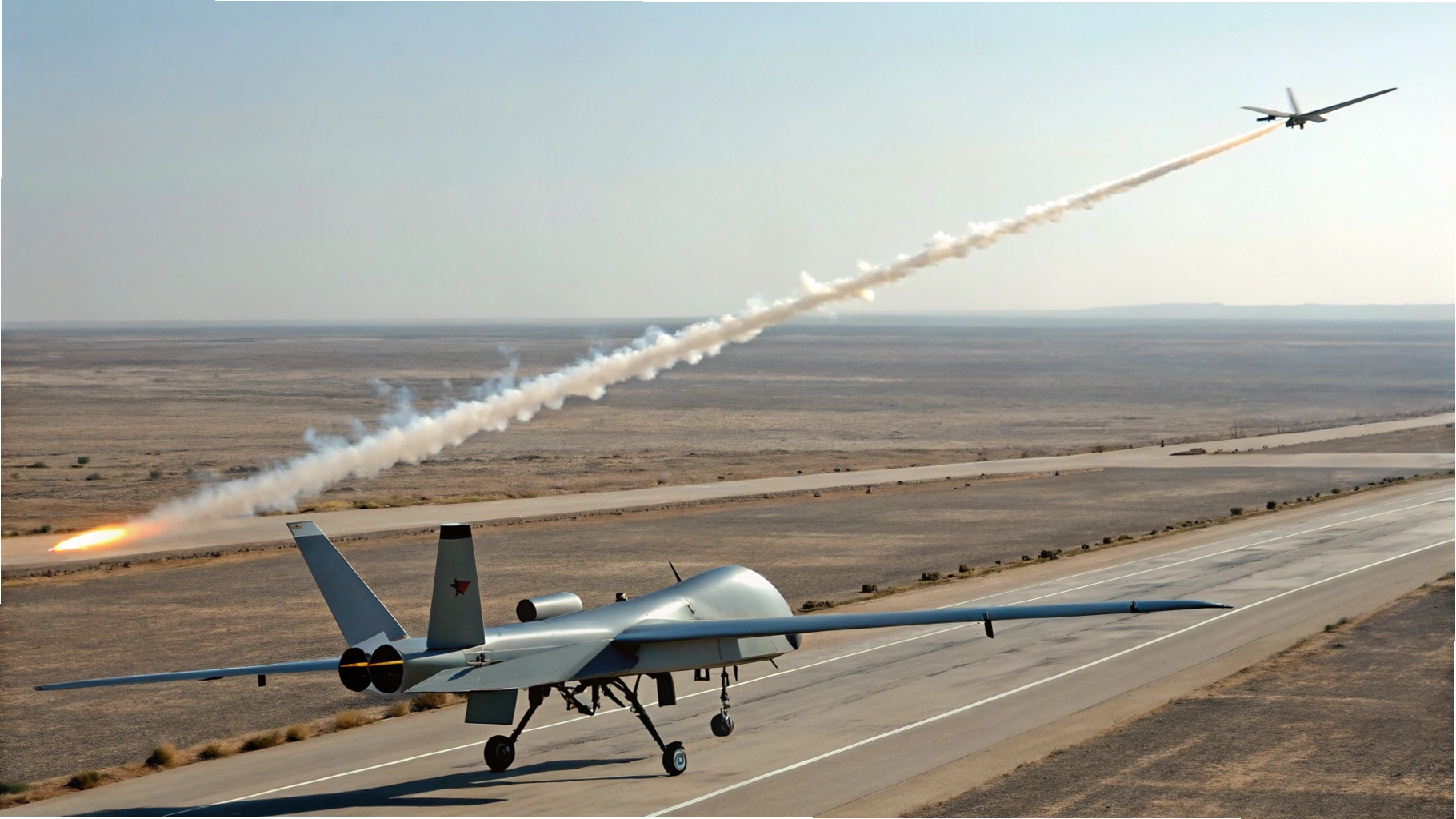
The Hermes family of unmanned aerial vehicles has played a major role in transforming modern intelligence and reconnaissance operations. Developed by Israeli defence company Elbit Systems, these medium-altitude, long-endurance drones are designed mainly for surveillance, target acquisition, and reconnaissance missions. The program began in the 1990s with the Hermes 450, which entered service in 1998 and quickly gained popularity due to its long endurance, modular design, and relatively low operational cost. Building on this success, Elbit introduced the Hermes 900 in 2009, featuring greater payload capacity, higher operational altitude, and endurance exceeding 30 hours. More recently, the Hermes 650 was introduced as a next-generation platform offering improved flexibility, survivability, and multi-role capability. The Hermes series includes several variants designed for different mission profiles. The Hermes 450 supports tactical operations, while the Hermes 900 is optimized for strategic long-endurance surveillance. The Watchkeeper WK450, developed in collaboration with the UK, further expanded the platform’s international footprint. Hermes drones are controlled through ground stations, although the aircraft themselves can perform autonomous navigation, takeoff, and landing. They carry advanced payloads such as electro-optical cameras, infrared sensors, radar systems, and electronic intelligence equipment, enabling real-time battlefield monitoring. One of the key advantages of the Hermes family is its ability to stay airborne for long periods, providing persistent surveillance without risking pilots. The drones are also adaptable to different mission requirements, from intelligence gathering to communication relay tasks. However, the platforms have limitations, including vulnerability to electronic warfare and lack of stealth capability in heavily defended airspace. Hermes drones have been used by multiple countries in combat operations, border security, maritime patrol, and disaster response missions. Israel has deployed them extensively in Gaza, while the UK used the Watchkeeper variant in Afghanistan. As warfare becomes increasingly technology-driven, the Hermes series is expected to evolve further with AI-powered analytics, advanced sensors, and stronger autonomous systems, ensuring its continued relevance in future military operations.