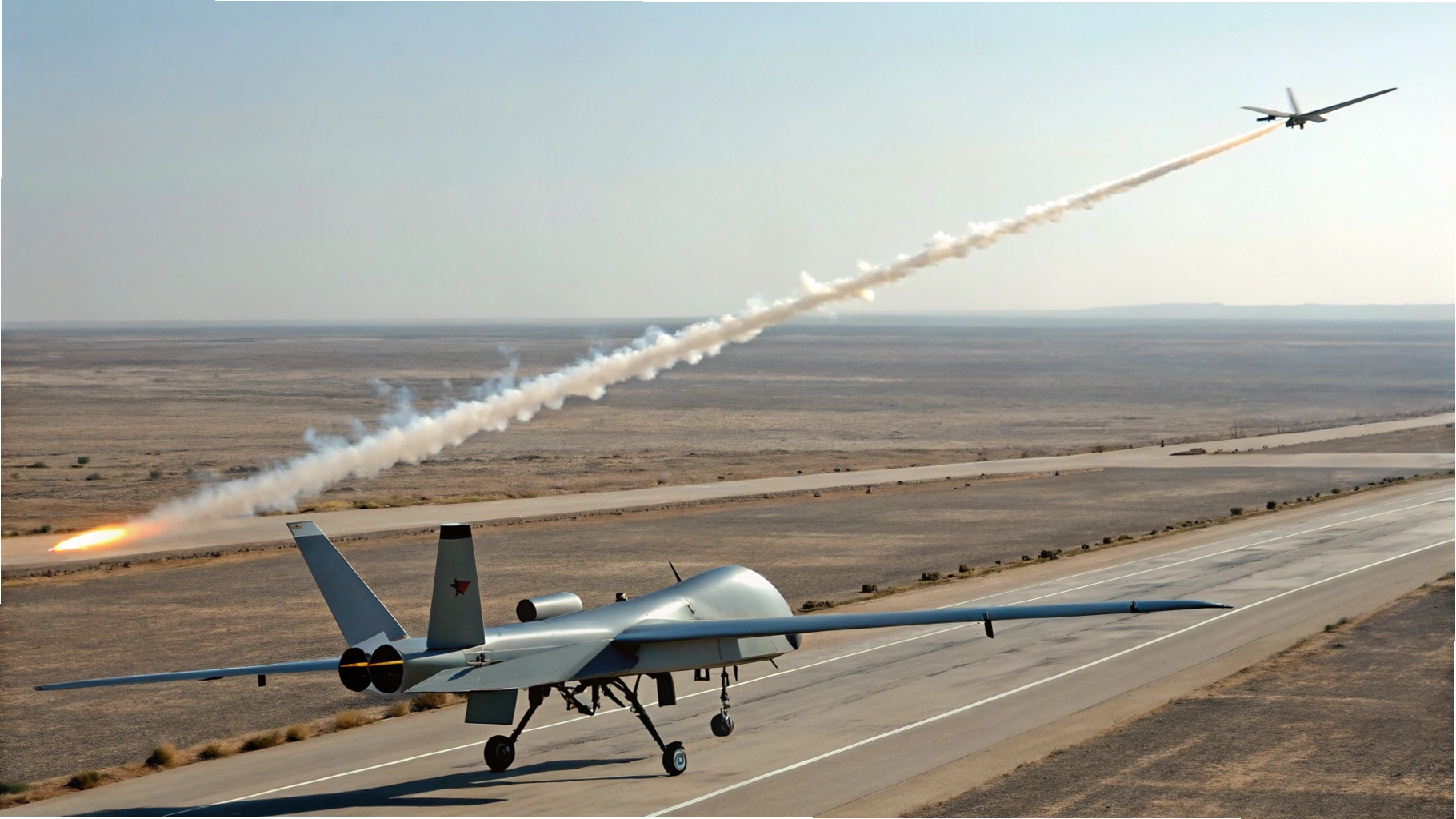
ADE has launched a series of infrastructure improvements aimed at strengthening India’s domestic aerospace development base. The DRDO laboratory is upgrading manufacturing systems and flight-control simulation facilities to support future aircraft and unmanned-system programs.
The modernization is relevant to projects such as autonomous UAVs, advanced unmanned combat systems, and the AMCA. These platforms depend on accurate manufacturing, detailed inspection, and extensive ground testing before flight trials.
One major effort involves Tooling, Assembly and Machining Systems. ADE plans to modernize existing multi-axis CNC equipment so it can produce more complex aerospace components with tighter dimensional tolerances. These facilities are used to manufacture prototype parts for aircraft, UAVs, flight-control equipment, and aerodynamic structures.
The laboratory is also improving metrology and inspection infrastructure. Modern aerospace components require highly accurate measurements, particularly when engineers work with composite structures, actuators, and stealth-related components. Better calibration equipment will support manufacturing with materials such as titanium alloys and advanced composites.
At the same time, ADE is upgrading its Flight Control System Integration Complex in Bengaluru. The seven-storey facility provides ground-based environments for testing digital flight-control systems and autonomous flight technologies.
Hardware-in-the-Loop simulation is a central capability. It allows real flight-control computers, sensors, actuators, and avionics to operate with simulated aircraft models. Engineers can therefore evaluate system performance under realistic conditions without putting a prototype aircraft at risk.
Iron Bird rigs provide another layer of testing by reproducing the aircraft’s complete flight-control architecture on the ground. Engineers can study the interaction between hydraulic systems, flight-control computers, and mechanical control surfaces before these systems are installed in an aircraft.
Pilot-in-the-loop simulators further support development by allowing test pilots to assess aircraft handling and control laws in a simulated cockpit. These tools help identify software and hardware problems before developmental flight trials.
The upgrades show that ADE’s role extends beyond aircraft design. Modern military aviation also requires strong manufacturing, measurement, simulation, and validation infrastructure. Improving these capabilities should support faster prototyping and more reliable testing of India’s future aircraft and autonomous systems.