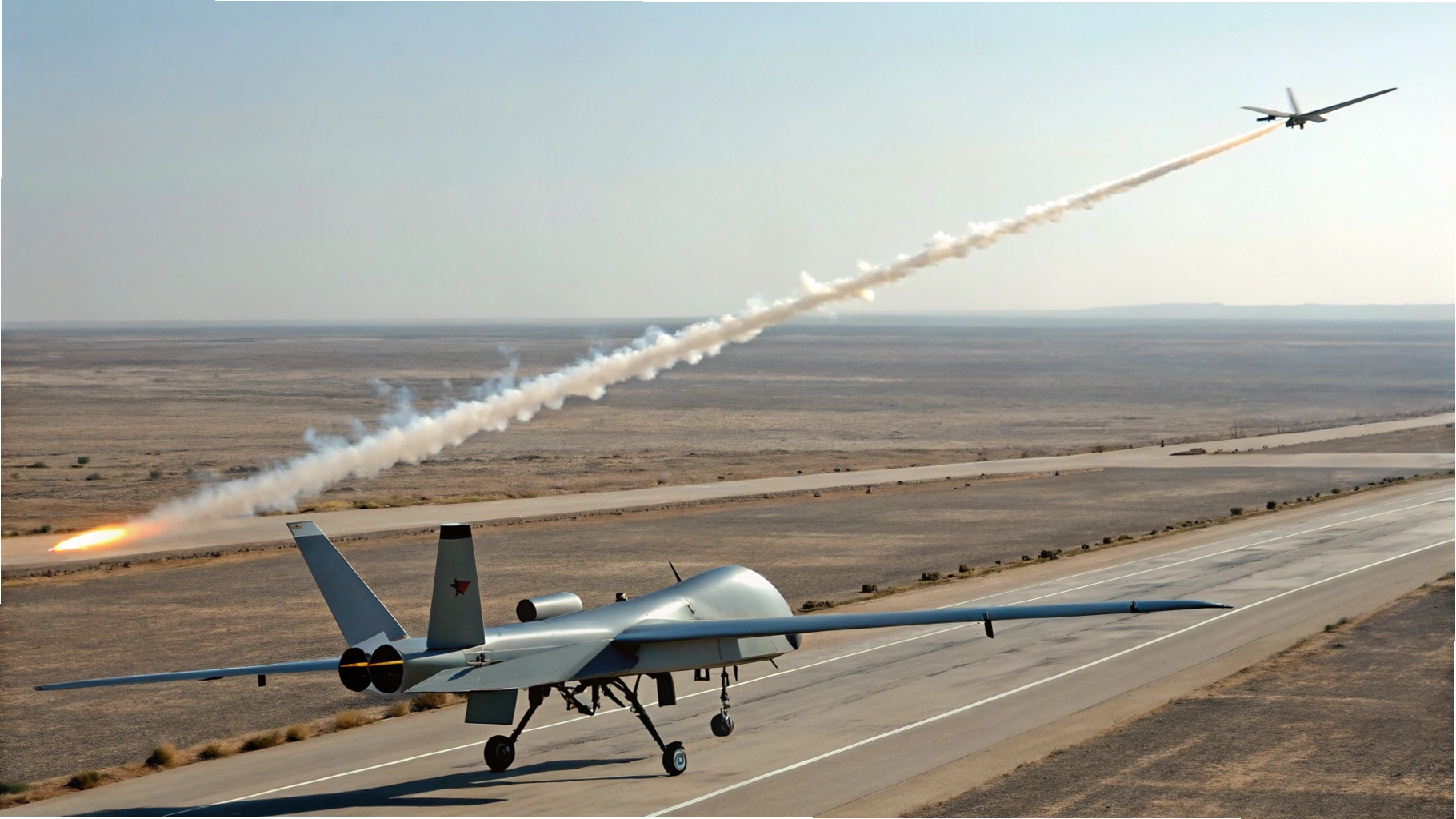

India is developing a lightweight air-to-ground missile intended to provide future unmanned aerial vehicles with greater precision-strike capability. The weapon is expected to weigh between 10 and 15 kilograms, measure up to two meters in length and carry a warhead of as much as two kilograms. Its compact dimensions are intended to make it suitable for integration with smaller UAVs that may have limited payload capacity. A key feature of the missile is its navigation architecture, which combines an Inertial Navigation System with a Selective Availability Anti-Spoofing Module. This configuration is intended to improve navigation reliability when satellite-based positioning is degraded, disrupted or subjected to spoofing. The development reflects India’s broader effort to expand the combat roles of indigenous drones by giving them access to lightweight precision weapons. Such a missile could allow UAVs to engage selected ground targets while maintaining greater operational flexibility. The system’s relatively low weight could also enable drones to carry multiple weapons or combine missile payloads with surveillance and electronic warfare equipment during future missions.