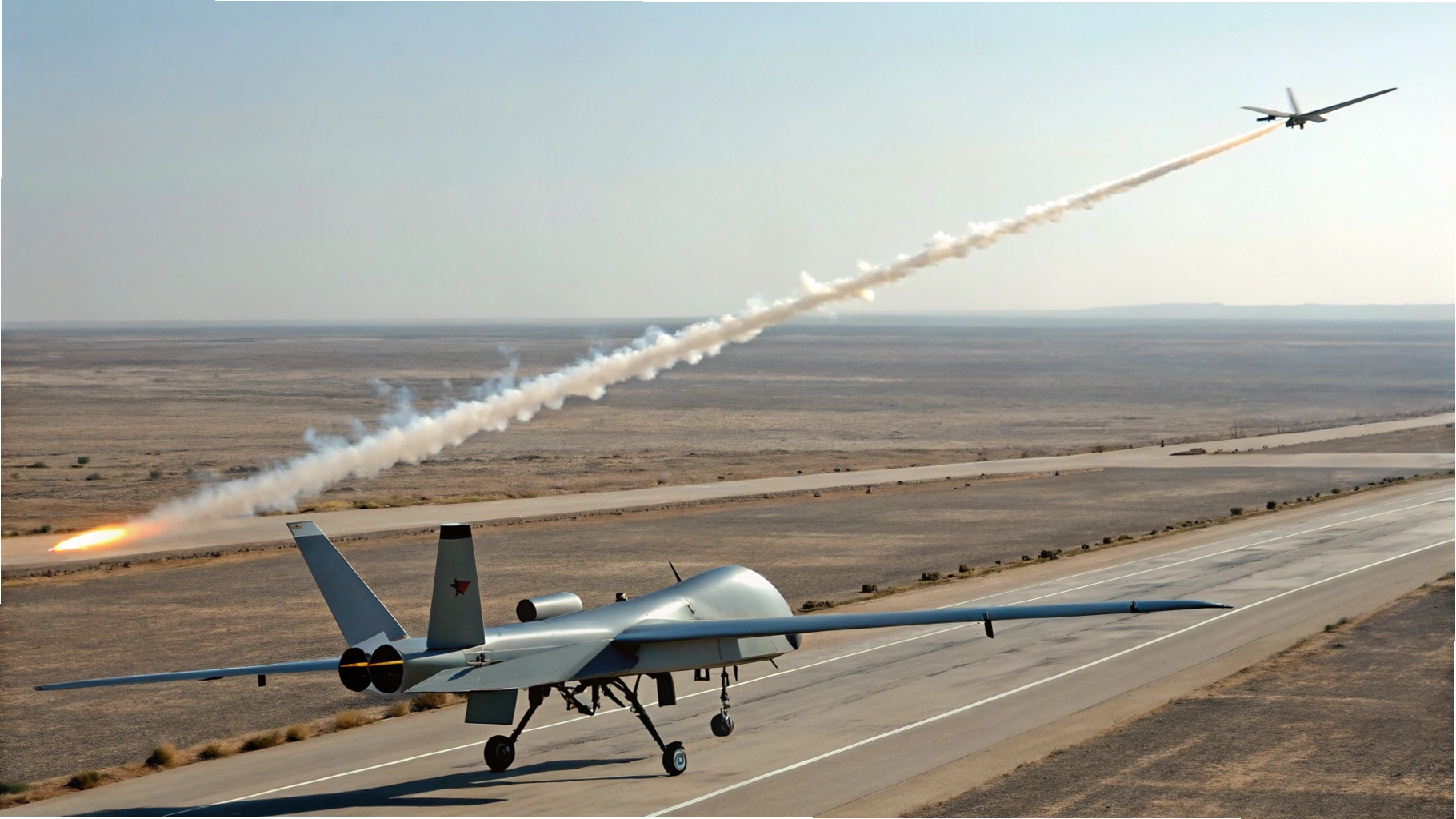

India’s missile forces have expanded significantly, with BrahMos providing a high-speed precision capability and LR-LACM being developed for longer-range strikes. Yet there is another requirement between tactical weapons and premium strategic missiles: an economical subsonic cruise missile with a range of roughly 500 km. Such a system could provide precision effects in larger numbers without competing directly with India’s more advanced missile families.
The strongest case for this concept is affordability. BrahMos is a sophisticated supersonic missile with advanced propulsion, sensors and guidance. LR-LACM is intended for strategic deep-strike missions. These systems are valuable, but using them for every target in a prolonged conflict could place pressure on both inventories and budgets.
A cheaper cruise missile could handle many operational targets that do not require maximum speed. Possible targets mentioned in the source include logistics hubs, ammunition storage areas, radar installations, bridges, fuel facilities and secondary command centres. Producing such a weapon in large quantities could help sustain strike operations over a longer period.
The production model would also matter. A missile designed for high-volume manufacture could use modular components and simpler systems. Greater participation from India’s private defence sector could allow production to be distributed among several industrial facilities. Indigenous compact turbofan development could eventually provide another option for propulsion and improve manufacturing resilience.
Large numbers could also complicate an opponent’s air-defence calculations. Integrated air-defence networks rely on a limited stock of interceptors. A high-volume missile force could force defenders to use those interceptors against comparatively inexpensive incoming weapons. This could create opportunities for more sophisticated weapons to be employed against priority targets later.
A 500-km missile could also improve command flexibility. Theatre commanders would have access to a precision-strike system without needing to request scarce strategic weapons for every battlefield requirement. This could support faster responses against airfields, logistics nodes, fuel depots, troop concentrations and command facilities.
The concept therefore fits into a layered strike portfolio. BrahMos would remain suited to high-value and time-sensitive missions. LR-LACM would retain its strategic deep-strike purpose. The proposed subsonic missile would occupy a lower-cost tier, providing quantity, flexibility and sustained precision fire. Its value would come not from replacing existing systems, but from complementing them.